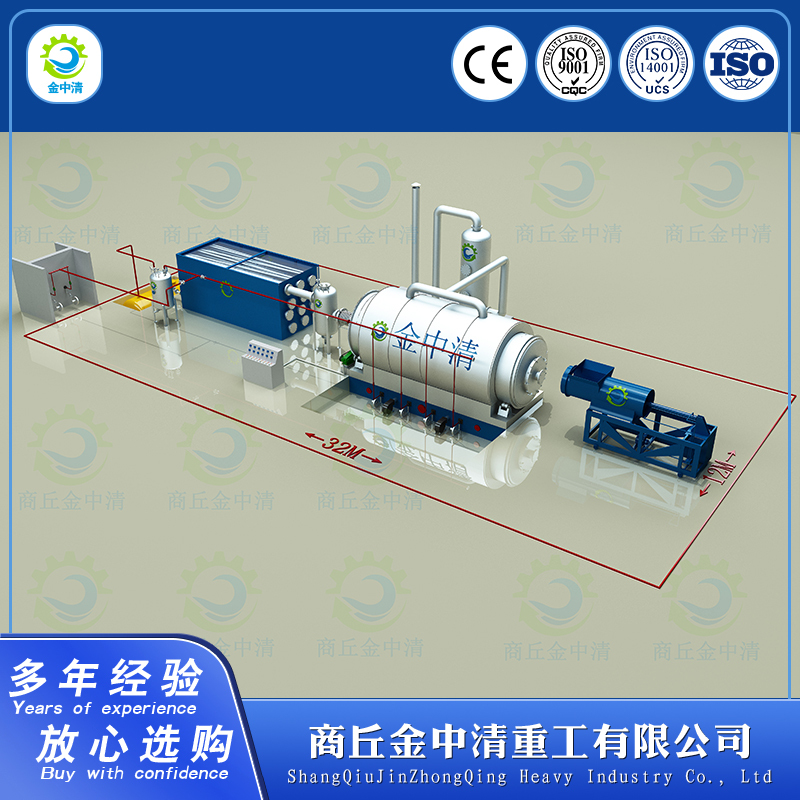
Intermittent cracking treatment project of waste plastics
Intermittent cracking treatment project of waste plastics
- Detail
- Parameters
Waste plastic treatment project
Project Development Background
Environmental hazards of waste plastics: waste plastics are difficult to degrade directly in the natural environment, causing serious environmental pollution; a large number of additives such as auxiliaries, fillers, solvents, etc. added to plastic products during the production process will precipitate into the environment, thereby polluting the soil and water. If waste plastics are contaminated with pollutants, they will attract mosquitoes and flies and breed bacteria, which is harmful to human health. From an energy perspective, plastic raw materials mainly come from non-renewable fossil resources such as coal, oil, and natural gas. If waste plastics are not controlled and recycled, the energy crisis will be aggravated.
1. Hazards to organisms: Generally, the polymers that make up plastics are safe and non-toxic, but in order to improve the processing and performance of plastic products, various additives are generally added. For example, in some polyvinyl chloride products, 35% to 50% or even higher phthalate plasticizers are added. In many plastics, stabilizers and colorants containing heavy metals are added. These additives can migrate to the external environment. Studies have found that these additives have residues in the atmosphere, biomass, water bodies, soil, river sediments, urban sludge and other media, and decompose slowly. Studies have shown that phthalates have estrogen-like effects, can interfere with endocrine, and may even cause reproductive dysfunction. In addition, during the polymerization of monomers and the processing of products, toxic and harmful monomers and toxic and harmful additives will remain, which are potential hazards.
2. Harm to soil and water resources: Agricultural mulch films have played a huge role in improving land utilization and effectively increasing the yield and quality of crops. However, most of the mulch films currently used in my country are polyolefin films, which are difficult to degrade naturally, destroying soil properties and the uniform distribution of fertilizers, affecting the absorption of water and nutrients, hindering the exchange of air between the soil and the outside world, making it difficult for microorganisms in the soil to survive, affecting the growth of plant roots, and ultimately causing soil compaction. Severe cases will cause land salinization, resulting in reduced crop yields and even difficulty in growing crops.
Shangqiu Zhongqing waste plastic processing equipment introduction:
Equipment advantages:
1. The cracking furnace body adopts a heat storage structure to fully recycle the waste heat, which can not only extend the service life of the main furnace, but also save fuel, thereby further saving production costs.
2. The furnace core is made of special high-temperature resistant boiler steel with a service life of up to 8 years.
3. The equipment is equipped with a self-developed infrared anti-blocking warning and dredging device. This device is an exclusive anti-blocking warning device developed by our company. It will warn of pipeline blockage during the production process and automatically solve the blockage problem, ensuring that the main furnace will not have safety problems due to pipeline blockage during the production process.
4. The slag discharge system adopts a double-cycle structure, which controls the slag discharge time to about 40 minutes. The slag discharge is fast and clean.
5. The accelerator independently developed by the company increases the oil yield by 3%-8% after use.
6. Use a new type of exhaust gas purification system to ensure that the purified exhaust gas meets the relevant national emission standards.
7. Excess combustible gas is dehydrated, desulfurized and impurized by the purification system, compressed by a special gas compressor and stored in a gas tank. It can be used for heating later, supplied to gas generators or sold.
8. Add convection vents and rapid cooling devices to the main furnace, so that the temperature of the main furnace can be reduced to below 100 degrees within three hours.