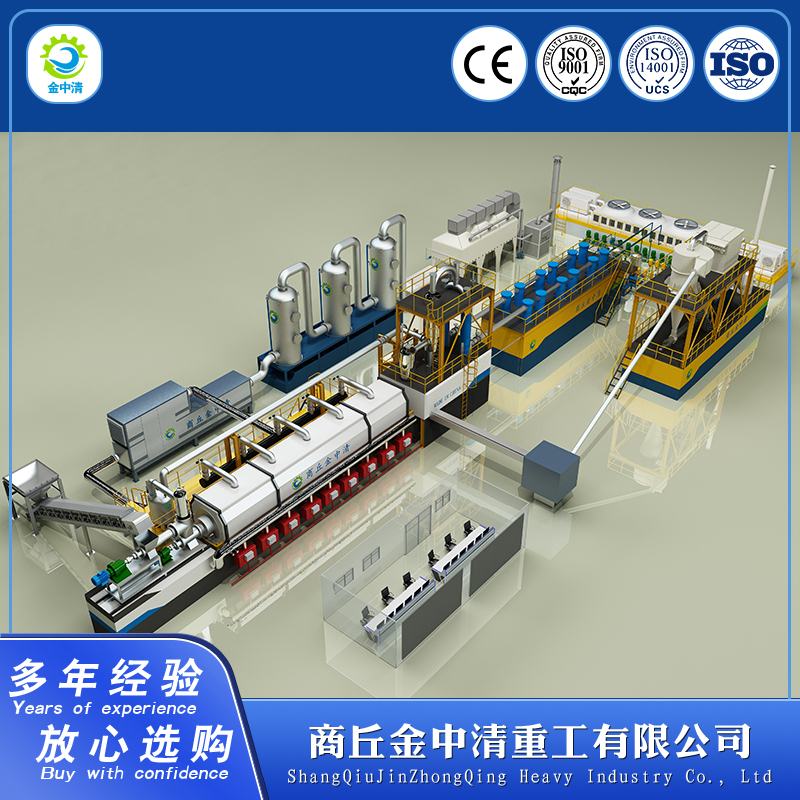
Fully automatic garbage disposal project
Fully automatic garbage disposal project
- Detail
- Parameters
Domestic waste treatment project
Project Development Background
In the process of urbanization, garbage, as a product of urban metabolism, was once a burden on urban development. Many cities in the world have been surrounded by garbage. But now, garbage is considered to be the most promising and inexhaustible "urban mineral deposit" and a "resource placed in the wrong place." This is not only a deepening of the understanding of garbage, but also an inevitable requirement for urban development.
China's waste treatment industry started late, but through continuous development, my country's waste treatment industry has begun to take shape. The capacity of the waste treatment market has increased significantly, the market penetration rate has increased rapidly, and the number of companies entering the sanitation industry has also increased rapidly. my country's waste treatment market has entered the growth stage from the introduction stage and is moving towards the maturity stage.
As environmental issues are gradually being taken seriously, energy conservation and environmental protection have become the development themes of various countries, and have begun to provide opportunities for the development of the garbage disposal industry. The average annual growth rate of garbage in the world is 8.42%, while the growth rate of garbage in China has reached more than 10%. The world produces 490 million tons of garbage every year, and China alone produces nearly 150 million tons of urban garbage every year. The accumulated stock of urban domestic garbage in China has reached 7 billion tons. Under such huge garbage pressure, there is reason to believe that the garbage disposal industry will become a star industry in China in the future.
The current treatment methods in China are: 1. Incineration. The essence of incineration is to oxidize organic waste into inert gaseous substances and inorganic non-combustible substances under high temperature and sufficient oxygen supply to form stable solid residues. First, the waste is placed in an incinerator for combustion to release heat energy, and then the waste heat is recovered for heating or power generation. The flue gas is discharged after purification, and a small amount of remaining residue is discharged, landfilled or used for other purposes. Its advantages are rapid volume reduction and thorough high-temperature harmlessness, small footprint, small impact on the surrounding environment, and heat recovery. Therefore, incineration of MSW is an effective treatment method for harmlessness, reduction and resource utilization. With the continuous enhancement of people's environmental awareness and the improvement of comprehensive utilization technologies such as heat recovery, the proportion of countries around the world using incineration technology to treat domestic waste is increasing year by year. 2. Composting. Using the microorganisms present in the garbage, the organic matter undergoes a biochemical reaction to generate a substance similar to humus soil, which can be used as fertilizer and to improve soil. Garbage composting has a history of thousands of years in rural China and is also one of the main methods of garbage treatment. Composting can be divided into aerobic and anaerobic methods according to the principle of decomposition, and most of them use high-temperature aerobic methods; according to the stacking method, it can be divided into open-air composting and mechanical composting. Aerobic composting is generally carried out in the open air, which occupies a large area and takes one month in winter and about half a month in summer to make fertilizer. Industrially developed countries use mechanical composting operations, which only takes 3 to 4 days to make fertilizer and occupies four-fifths less area than conventional methods. When composting with mechanized equipment, the stacking method is often used in the early stage, which does not require pre-processing or crushing, but the materials that cannot be made into fertilizer must be separated out; at present, fixed towers, fixed chambers or drums are used for garbage composting, among which horizontal drums are the most used, and multi-layer vertical fermentation towers are also used in a certain proportion. During the composting process, earthworms can be raised, which can digest garbage and feed fish and chickens. Treating garbage with sludge or composting garbage with feces can not only reduce environmental pollution, but also improve fertilizer efficiency. It is the most promising method for domestic waste treatment in developing countries. 3 Landfill is a relatively old and widely used method for garbage treatment. Since the ancient Greek era, countries around the world have been using this method to dispose of garbage. In order to prevent secondary pollution and facilitate landfill, landfill materials must meet the following requirements: (1) Toxic and harmful substances are strictly prohibited. This includes toxic industrial products and their residues, toxic drugs; substances that react chemically and produce harmful substances, corrosive or radioactive substances, flammable, explosive and other dangerous goods, biological hazardous materials, hospital waste and other pollutants. (2) (2) The moisture content of the landfill material is less than 20% to 30%, the inorganic content is greater than 60%, and the density is greater than 0.5t/m3.
(3) In areas with heavy rainfall, the moisture content of the landfill is allowed to increase appropriately, but it is advisable not to hinder the compaction construction. Landfill is an engineering treatment process. The site selection should comply with the requirements of the local urban and rural construction master plan and be consistent with the local requirements of atmospheric protection, water resource protection, nature protection and ecological balance. The landfill site should be located in a place with convenient transportation, short transportation distance, low land acquisition cost and convenient construction, and make full use of natural depressions, ditches, canyons, waste pits, etc. In order to prevent groundwater pollution, artificial anti-seepage must be carried out, that is, the bottom and four walls of the site are treated with anti-seepage materials. When landfilling garbage, the method of layer-by-layer compaction is adopted. The density after compaction is greater than 0.6t/m, and the thickness of each layer of garbage is 2.5-3m. The maximum thickness of the garbage layer is 9m for one-time landfill treatment. After the garbage is compacted, it must be covered with 20-750cm of soil. Landfill treatment can be divided into three types: sanitary landfill, compressed garbage landfill and crushed garbage landfill. Coal mining areas can make full use of subsidence areas or abandoned mines as landfill sites, which not only saves land but also has less impact on the mining area environment.
4 Recycling: Useful materials in garbage, such as waste paper, black and non-ferrous metals, plastics, fabrics, glass and ceramics, leather and rubber, should be recycled. This is also one of the important measures to protect the environment. Recycling methods include gravity, flotation, magnetic separation, electrostatic separation and other methods.
Description of Shangqiu Zhongqing's domestic waste treatment process:
Equipment advantages:
1. The cracking furnace body adopts a heat storage structure to fully recycle the waste heat, which can not only extend the service life of the main furnace, but also save fuel, thereby further saving production costs.
2. The furnace core is made of special high-temperature resistant boiler steel with a service life of up to 8 years.
3. The equipment is equipped with a self-developed infrared anti-blocking warning and dredging device. This device is an exclusive anti-blocking warning device developed by our company. It will warn of pipeline blockage during the production process and automatically solve the blockage problem, ensuring that the main furnace will not have safety problems due to pipeline blockage during the production process.
4. The slag discharge system adopts a double-cycle structure, which controls the slag discharge time to about 40 minutes. The slag discharge is fast and clean.
5. The accelerator independently developed by the company increases the oil yield by 3%-8% after use.
6. Use a new type of exhaust gas purification system to ensure that the purified exhaust gas meets the relevant national emission standards.
7. Excess combustible gas is dehydrated, desulfurized and impurized by the purification system, compressed by a special gas compressor and stored in a gas tank. It can be used for heating later, supplied to gas generators or sold.
8. Add convection vents and rapid cooling devices to the main furnace, so that the temperature of the main furnace can be reduced to below 100 degrees within three hours.