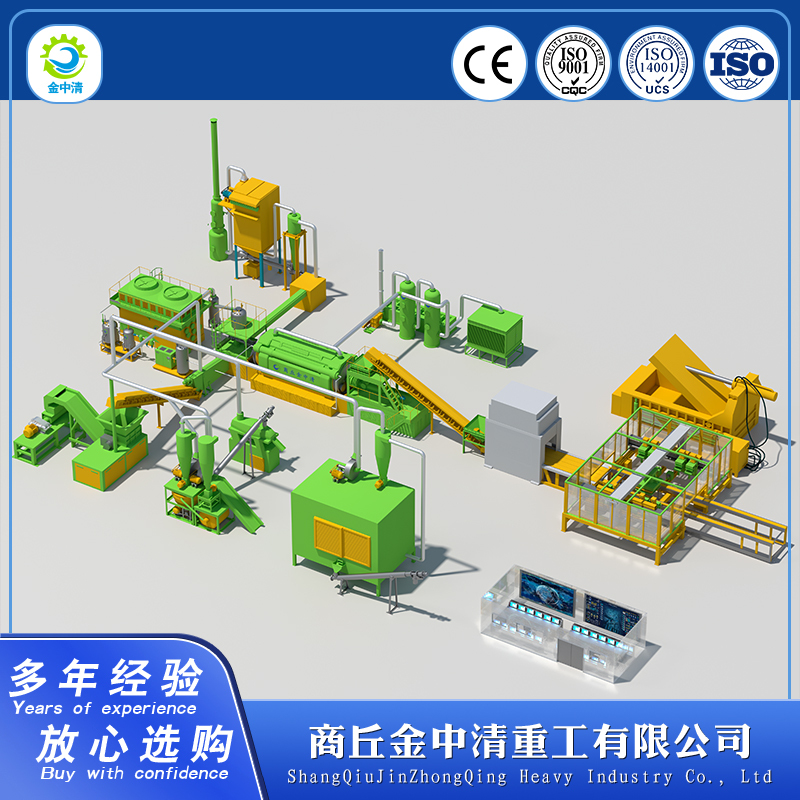
Pyrolysis equipment for waste photovoltaic panels
Pyrolysis equipment for waste photovoltaic panels
- Detail
- Parameters
Pyrolysis is the process of using heat energy to decompose substances under oxygen-free or oxygen-deficient conditions. In the photovoltaic industry, photovoltaic pyrolysis is mainly used to treat waste photovoltaic modules. Because photovoltaic modules contain a variety of materials, such as glass, silicon wafers, organic packaging materials, etc., pyrolysis can decompose and recycle these materials. For example, through high-temperature pyrolysis, organic packaging materials (such as EVA film) will decompose into small molecular hydrocarbons, while silicon wafers can be separated and reused, which can effectively reduce the pollution of photovoltaic waste to the environment, and also recover valuable materials in them.
Advantages of photovoltaic pyrolysis process:
1. High material recovery efficiency:
- Multiple materials can be recycled: Photovoltaic modules contain glass, silicon wafers, metals (such as silver, aluminum, copper, etc.) and organic packaging materials. The pyrolysis process can effectively separate these components of different materials and achieve a high material recycling rate. For example, glass can be recycled for the production of glass products; metal components can be further refined and extracted and reused in the electronics, machinery and other industries; silicon wafers can also be used as silicon materials again in the photovoltaic or semiconductor industry after processing, greatly reducing the demand for primary resources.
- High recycling purity: Compared with some other recycling methods, the pyrolysis process can obtain relatively high purity recycled materials to a certain extent. Because the pyrolysis process is carried out under specific temperature and atmosphere conditions, it can decompose organic materials more accurately while having less impact on inorganic materials, which is conducive to the subsequent purification and refining of various components.
2. Strong processing capability:
- Suitable for large-scale processing: With the rapid development of the photovoltaic industry, a large number of waste photovoltaic modules will be recycled in the future. The pyrolysis process can achieve continuous and large-scale production, which can meet the processing needs of a large number of waste photovoltaic modules. By establishing large-scale pyrolysis equipment and production lines, a large number of waste photovoltaic modules can be efficiently processed, improving the efficiency and economy of recycling.
- Applicable to complex components: The structure of photovoltaic components is relatively complex, usually composed of a variety of materials of different properties through packaging and other processes. The pyrolysis process has a good processing ability for such complex structure components, can effectively decompose the organic packaging materials therein, and separate the materials of each layer. It has a certain applicability to photovoltaic components of different types, specifications and structures.
3. Great potential for energy recovery: During the pyrolysis process, the decomposition of organic packaging materials (such as EVA films, etc.) will generate a large amount of heat energy. This heat energy can be recovered and utilized through appropriate technical means, such as for self-heating of pyrolysis equipment or heat supply in other production links, thereby reducing the energy consumption of the entire recycling process, improving the comprehensive utilization efficiency of energy, and to a certain extent, reducing the recycling cost.
4. Relatively good environmental friendliness:
- Reduce waste emissions: If not effectively recycled, harmful substances (such as lead) in waste photovoltaic modules may leak into the environment, causing pollution to soil, water, etc. The pyrolysis process can fix or transform harmful substances in waste photovoltaic modules to reduce their potential harm to the environment. And by recycling the valuable materials in them, the amount of waste generated and landfilled is reduced, reducing the pressure on the environment.
- Low pollution emission control: Although some gas products may be produced during the pyrolysis process, these gases can be effectively purified and treated through reasonable process design and tail gas treatment system to meet environmental emission standards, thereby reducing pollution to the environment.