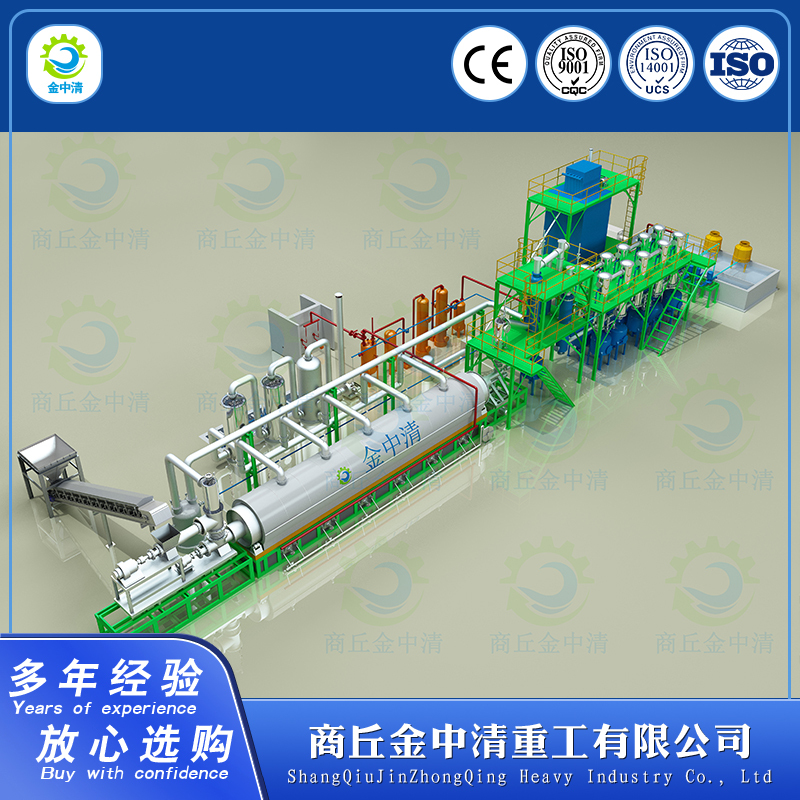
Continuous cracking treatment project of waste plastics
Continuous cracking treatment project of waste plastics
- Detail
- Parameters
Waste Plastic Treatment Project
Project Development Background
Environmental Hazards of Waste Plastics: Waste plastics are difficult to be directly degraded in the natural environment, causing serious environmental pollution; A large number of additives such as auxiliaries, fillers, solvents, etc. added during the production process of plastic products will析出 into the environment, thereby polluting the soil and water bodies. Waste plastics, if adhered with contaminants, will attract mosquitoes and flies and breed bacteria, endangering human health. From an energy perspective, the raw materials of plastics mainly come from non-renewable fossil resources such as coal, oil, and natural gas. If waste plastics are not controlled, recycled, and reused, the energy crisis will be aggravated.
1 Hazard to Living Organisms: Usually, the polymers that make up plastics are safe and non-toxic, but to improve the processing and performance of plastic products, various additives are generally needed. For example, in some polyvinyl chloride products, the addition amount of phthalate plasticizers can reach 35% - 50% or even higher. Heavy metal-containing stabilizers and colorants are added to many plastics, and these additives can migrate to the external environment. Studies have found that these additives have residues in media such as the atmosphere, biomass, water bodies, soil, river sediment, and urban sludge, and decompose slowly. Studies have shown that phthalates have estrogen-like effects, can interfere with endocrine functions, and may even cause abnormal reproductive functions. Moreover, toxic and harmful monomers and toxic and harmful auxiliaries will remain during the monomer polymerization and product processing, which are all potential hazard factors.
2 Hazard to Soil and Water Resources: Agricultural plastic films have played a huge role in improving land utilization and effectively increasing the yield and quality of crops. However, most of the plastic films currently used in China are polyolefin films, which are difficult to degrade naturally, destroying the soil properties and the uniform distribution of fertilizers, affecting the absorption of water and nutrients, hindering the air exchange between the soil and the outside, making it difficult for microorganisms in the soil to survive, affecting the growth of plant roots, and ultimately causing soil hardening. In severe cases, it can cause soil salinization, resulting in reduced crop yields or even difficulty in growth.
Introduction to Shangqiu Zhongqing Waste Plastic Treatment Equipment:
Equipment Advantages:
1, Continuous production can last for more than 15 days, and plastic oil sludge and oil sand can be continuously produced for more than 30 days.
2, The cracking furnace body adopts a regenerator structure, fully recycling waste heat, which can not only extend the service life of the main furnace but also save fuel. Thus, further saving production costs.
3, The equipment is equipped with an independently developed infrared anti-blocking early warning and dredging device. This device is the company's self-developed exclusive anti-blocking early warning device. During the production process, it warns of pipeline blockage and automatically solves the blockage problem to ensure that the main furnace will not have safety problems due to pipeline blockage during production.
4, A new type of waste gas purification system is adopted to make the gas discharged after purification meet the relevant national emission standards.
5, The furnace liner is made of specially made high-temperature-resistant boiler steel with a准字号, and its service life can reach 8 years.
6, The company's independently developed catalyst can increase the oil yield by 3% - 8% after use.